Imagine a radiologist who never gets tired, never has a bad day, and has studied millions of X-rays, mammograms, and retinal photographs before ever looking at a single patient's scan. That is roughly the promise behind AI medical image diagnosis — and over the past decade, it has moved from a laboratory curiosity to a clinical reality that hospital operations managers need to understand.
This article explains, in plain terms, what AI image diagnosis actually is, how these systems are trained, what the evidence says about their accuracy, and what the practical implications are for your facility and your patients.
What Is AI Medical Image Diagnosis?
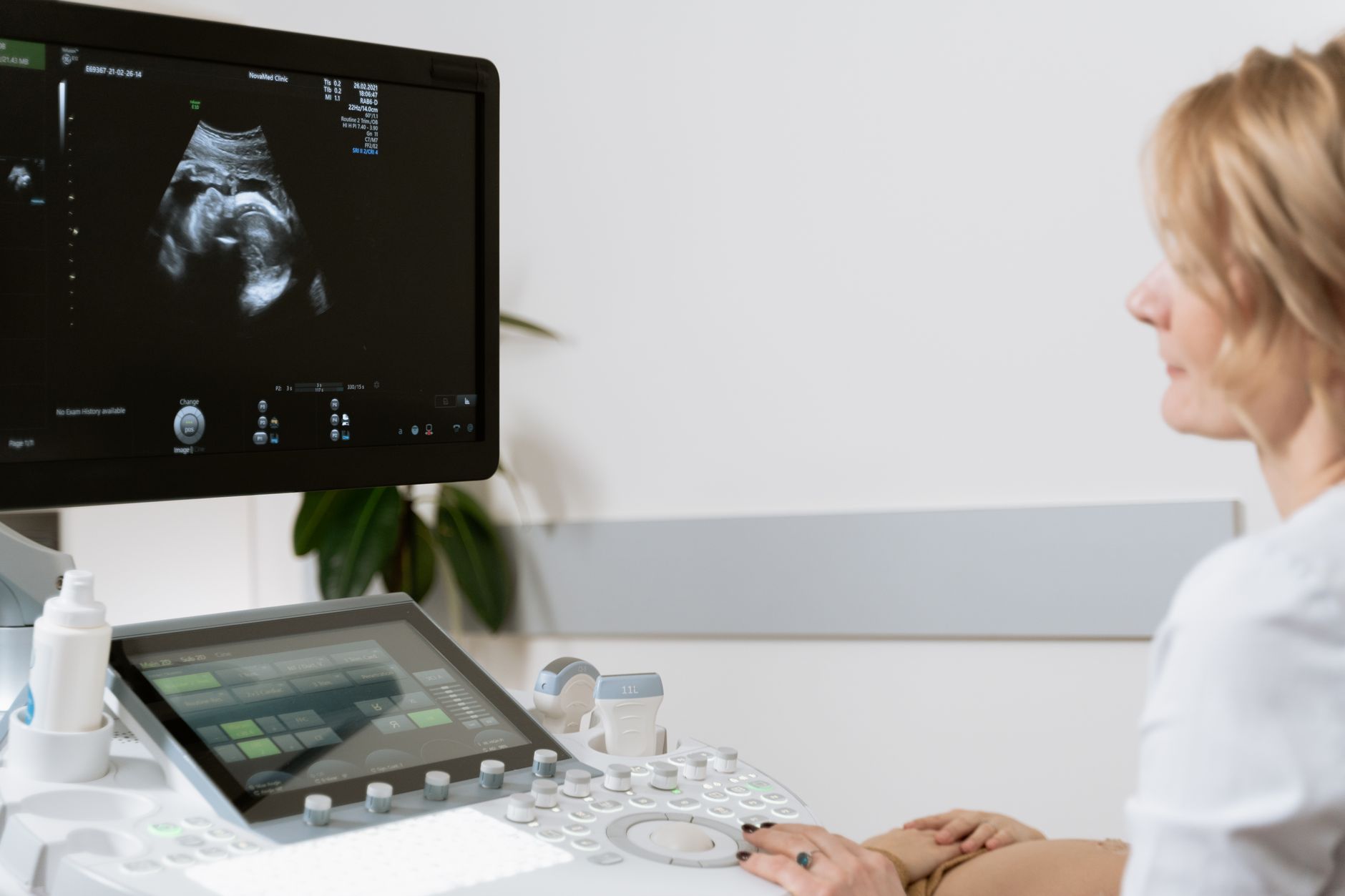
Medical image diagnosis using AI means teaching a computer program to look at a scan — an X-ray, a mammogram, a retinal photograph, a CT slice — and identify signs of disease, just as a trained clinician would. The key word is "trained." These systems are not programmed with explicit rules like "if this shadow appears, flag it as a tumor." Instead, they learn patterns by studying enormous collections of images that have already been labeled by experts.
The underlying technology is called deep learning, a branch of artificial intelligence. Deep learning uses structures called neural networks — loosely inspired by how neurons connect in the human brain — to find features in data. When applied to images, these are specifically called convolutional neural networks (CNNs). A CNN scans an image in small overlapping sections, detecting edges, textures, shapes, and eventually more complex patterns like the irregular borders of a tumor or the tiny hemorrhages characteristic of diabetic retinopathy.
The more images a CNN sees during training, the more nuanced its pattern recognition becomes. This is why dataset size matters enormously in this field.
💼 Healthcare Career Opportunities
Explore healthcare management and administration roles from hospitals, clinics, and health systems.
Browse Jobs →How Training Actually Works: From Labeled Images to Diagnostic Decisions
To build an AI diagnostic system, developers start with a large collection of medical images — sometimes hundreds of thousands of them. Each image is labeled: "cancer present," "no cancer," "mild retinopathy," "severe retinopathy," and so on. These labels are usually assigned by experienced clinicians or confirmed through biopsy and other gold-standard tests.
The neural network is then exposed to these images repeatedly. Each time it makes a prediction, it compares that prediction to the correct label and adjusts its internal parameters slightly to do better next time. After millions of these adjustments across hundreds of thousands of images, the network develops a highly refined ability to spot disease-related patterns — patterns that may be too subtle or too numerous for the human eye to catch consistently.
Crucially, the system is then tested on images it has never seen before to make sure it has genuinely learned to generalize, rather than simply memorizing its training data. This validation step is what separates a research prototype from a clinically credible tool.
Real-World Accuracy: What the Evidence Shows
For years, the key question was: can these systems actually match or beat human specialists? The evidence that has accumulated is striking.
Breast Cancer Detection
A 2020 study published in Nature found that an AI model trained on mammograms detected breast cancer more accurately than an average radiologist, reducing false positives by 5.7% and false negatives by 9.4% in the U.S. dataset.
To put those numbers in context: a false positive means a scan is incorrectly flagged as suspicious, leading to unnecessary follow-up procedures, patient anxiety, and cost. A false negative means a cancer is missed entirely — the more dangerous error. Reducing both simultaneously is significant, because in traditional screening there is often a trade-off between the two.
Skin Cancer Diagnosis
Stanford researchers published results in 2017 showing a convolutional neural network diagnosed skin cancer (melanoma) with accuracy comparable to board-certified dermatologists using a dataset of 129,450 clinical images.
Melanoma is one of the deadliest skin cancers precisely because early-stage lesions are hard to distinguish from benign moles, even for trained eyes. The fact that a CNN trained on images — without any other patient information — could match specialist-level performance suggested the technology had crossed a meaningful threshold.
Diabetic Retinopathy
Diabetic retinopathy is a complication of diabetes that damages blood vessels in the retina and is a leading cause of blindness. Screening requires a specialist to examine detailed photographs of the back of the eye — a resource that is scarce in many communities. The FDA cleared IDx-DR in 2018 as the first autonomous AI diagnostic system approved to detect diabetic retinopathy without a clinician needing to interpret the result.
"Autonomous" is the critical word here. Unlike systems that flag images for a doctor to review, IDx-DR delivers a diagnostic output directly. This was a regulatory landmark: it meant the AI was trusted, within defined parameters, to make the call on its own.
The Regulatory Landscape: What FDA Clearance Actually Means
When you hear that an AI diagnostic tool has received FDA clearance or authorization, it means the agency reviewed evidence that the device is safe and effective for its intended use. It does not mean the AI is perfect — it means regulators judged its benefits to outweigh its risks in the context it was designed for.
The FDA has cleared or authorized more than 500 AI-enabled medical devices as of 2023, with radiology and cardiology imaging representing the largest share of approvals.
This number reflects how rapidly the field has matured. Radiology dominates because imaging has always generated large, structured datasets — exactly what deep learning needs to thrive. Cardiology imaging, including AI analysis of echocardiograms and cardiac CT scans, has followed close behind.
For hospital operations managers, FDA clearance is an important threshold for procurement decisions. A cleared device has a defined intended use, a validated performance profile, and post-market surveillance requirements. Tools that lack this clearance may still be useful in research contexts, but carry a different risk profile for clinical deployment.
What AI Image Diagnosis Does — and Does Not — Do
It is worth being precise about the role these systems actually play in a clinical workflow, because there is a lot of hype that overstates their independence and a lot of skepticism that understates their genuine value.
What These Systems Do Well
- Consistency: An AI system applies the same criteria every time, at any hour, without fatigue. Human performance is known to degrade with workload and time of day.
- Speed: A CNN can analyze an image in seconds. This matters in emergency settings — for example, flagging a potential stroke on a CT scan so it reaches a radiologist immediately.
- Scale: AI can help extend specialist-level screening to settings where specialists are scarce, as the diabetic retinopathy use case illustrates.
- Second opinions: Many systems are deployed not as autonomous decision-makers but as tools that highlight suspicious regions for a clinician to review, functioning as a tireless second reader.
What These Systems Do Not Do
- They do not understand patients. A CNN sees pixels, not a person with a history, symptoms, medications, and comorbidities. Final clinical judgment requires integrating image findings with everything else known about the patient.
- They can fail on unfamiliar data. A model trained on images from one type of scanner, one patient population, or one institution may perform worse when deployed in a different environment. This is called distribution shift, and it is a real operational risk.
- They inherit biases from training data. If the training dataset underrepresents certain demographic groups, performance may be weaker for those patients. This is an active area of research and regulation.
Practical Implications for Hospital Operations
For healthcare administrators, the rise of AI image diagnosis raises concrete operational questions.
Workflow Integration
An AI tool that sits outside your existing radiology information system or picture archiving system will create friction rather than efficiency. The most successful deployments integrate AI outputs directly into the systems clinicians already use, so findings appear without requiring an extra step or login.
Staff Roles and Trust
AI image tools change — but do not eliminate — the clinician's role. Radiologists working alongside AI systems tend to spend less time on clear negative cases and more time on the ambiguous ones the AI flags. This requires some recalibration of how time is allocated and how confidence in AI recommendations is developed through experience. Staff education matters: clinicians who understand what a tool is designed to detect, and what it is not, use it more safely than those who treat it as either infallible or irrelevant.
Validation Before Deployment
Before deploying any AI diagnostic tool, leading health systems run a local validation study: they test the tool on their own patient images, with their own scanners, to confirm that published performance holds in their specific environment. This step protects patients and gives clinical leadership an honest picture of what to expect.
Equity Considerations
One of the most compelling arguments for AI screening — the ability to extend specialist-level diagnosis to underserved communities — is also the context where performance gaps can do the most harm if training data was not representative. Administrators evaluating these tools should ask vendors directly about demographic performance breakdowns.
The Broader Picture: Where This Is Heading
AI image diagnosis is not a future technology waiting to arrive. The regulatory approvals, the published clinical evidence, and the deployment in hospitals around the world confirm it is already here. The question for operations managers is not whether to engage with it, but how to do so thoughtfully.
The tools that have demonstrated the strongest real-world value share a few characteristics: they target conditions where large labeled datasets exist, where consistent screening is difficult to deliver at scale, and where the cost of a missed diagnosis is high. Diabetic retinopathy screening, cancer detection in mammography, and emergency triage in radiology fit that profile well.
Understanding what these systems actually do — how they learn, what they measure, where they can fail — puts administrators in a much stronger position to evaluate vendor claims, support clinical staff through adoption, and protect patients from both over-reliance and unnecessary skepticism.
The AI reading your patients' scans did not go to medical school. But in certain well-defined tasks, it has studied more images than any physician ever could — and the results are changing what good diagnostic practice looks like.
Sources
Every factual claim in this article was independently verified against the following sources:
- Autonomous Artificial Intelligence in Diabetic Retinopathy Testing—Lessons Learned on Successful Health System Adoption - ScienceDirect — sciencedirect.com
- International evaluation of an AI system for breast cancer screening | Nature — nature.com
- Dermatologist-level classification of skin cancer with deep neural networks — cs.stanford.edu
- FDA's AI Medical Device List: Stats, Trends & Regulation | IntuitionLabs — intuitionlabs.ai